
| Home |
|
PREFACE | PRIMEVAL | SPECIAL | GENERAL | CONCLUSION |
| Dictionary | Newton | Equivalence | Einstein | Schwarzschild |
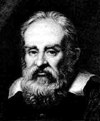 Galileo's Principle:
all bodies fall with the same acceleration, regardless of its mass and
its composition. The motion of any body depends only on the event
and its initial velocity when it was released.
Galileo's Principle:
all bodies fall with the same acceleration, regardless of its mass and
its composition. The motion of any body depends only on the event
and its initial velocity when it was released.
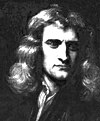 Newton's Law of Universal Gravitation
Inertial mass = Gravitational mass
In other words, given an event and an initial velocity vector, a particle will travel a definite curve (regardless of its mass or composition).
NEWTON'S LAW OF GRAVITATION
Every object attracts every other object,
by virtue of their having mass.
An object with twice the mass will attract other objects
with twice the force.
An object twice as far away will attract other objects
with one-fourth the force.
Galileo's statement is TRUE (as far as, "it agrees with experiment"). Newton's Law of Motion combined with his Law of Gravitation together embodies Galileo's Law of Gravitation. Einstein will use Galileo's Law of Gravitation with Einstein's Principle of Relativity to develop his own Law of Gravitation: General Relativity.
 Introducing the PRINCIPLE OF EQUIVALENCE
| Home |
|
PREFACE | PRIMEVAL | SPECIAL | GENERAL | CONCLUSION |
| Dictionary | Newton | Equivalence | Einstein | Schwarzschild |